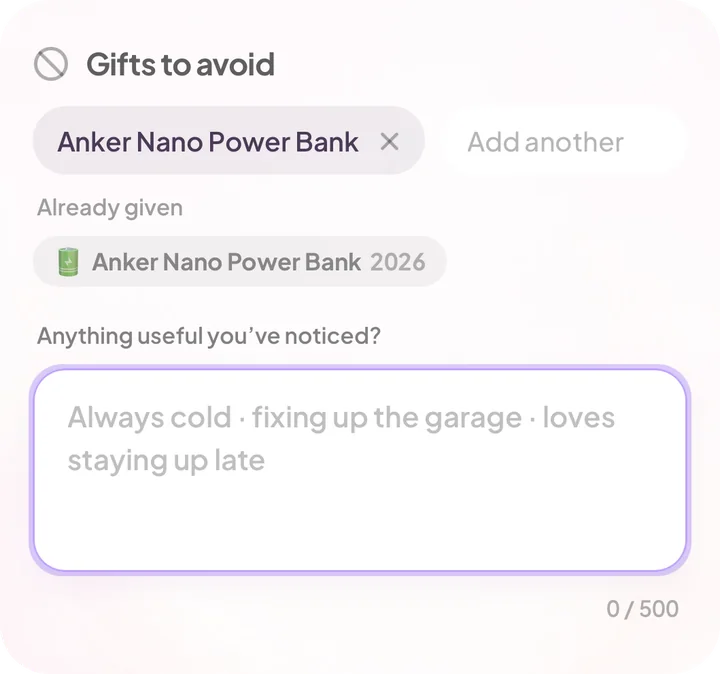
Keep a short record of what you gave, when, and how it landed. Before buying, check three things: have I given this exact thing, do they already have enough of this category, and if I am repeating it, is that on purpose? An intentional repeat of something they love is often the better gift.
Buying their favourite coffee again is not the same mistake as buying a second copy of the novelty book you gave two birthdays ago. One is an intentional repeat. The other is forgetting what you already gave them.
That is why “never give the same gift twice” is too simple. A 2020 paper in the Journal of Business Research found, across nine studies, that givers avoided repeat gifts more than recipients wanted them to. Givers saw repeats as less thoughtful and more boring, even when the repeat was a better match for what the recipient liked.
So every gift does not need to be new. It helps to know when you are repeating something on purpose.
A repeat gift is not automatically a bad gift
Novelty feels important to the giver because you remember doing it before. The recipient may care more about getting something they actually like. Think of:
- a favourite food or drink
- flowers they genuinely love
- a subscription they use
- tickets to something they go to every year
- supplies for a hobby they actively do
- a consumable they would buy themselves anyway
- a restaurant or experience that has become a tradition
If the reason still fits, repetition can be a feature. The mistake is not “I have given coffee before.” It is “I had no idea I already bought the exact same thing last year.”
Good repeat or accidental repeat?
A good repeat is chosen because the last one worked. An accidental one happens because you forgot.
- The same bakery’s cinnamon buns every birthday, because it is a tradition
- Another year of the museum membership they use constantly
- A refill of something they have nearly finished
- Another book by the author they are reading right now
- A second copy of a book already on their shelf
- Another novelty mug after last Christmas’s, and they own twelve
- The gadget you remember almost buying last year, except you did buy it
- A new version of something they no longer use
Be careful with “they liked it last time”
People are polite when they open gifts. “Thank you, I love it” in the moment does not mean “please buy me this every year.” Repeat when you have better evidence:
- you have seen them use it
- they asked where it came from
- they bought more themselves
- they mentioned it months later
- they asked for the same thing again
- it is an established tradition between you
If all you know is that they smiled while opening it, treat the outcome as unknown. That is not cynicism. It just stops one polite reaction becoming a permanent rule.
Record more than the product name
A gift history becomes useful when it keeps the reason and the outcome.
Candle
Cedar candle from the local shop, birthday 2025. She finished it and later asked where I got it.
Puzzle book, Christmas 2025. Seemed polite but never saw it again. Do not assume this category landed.
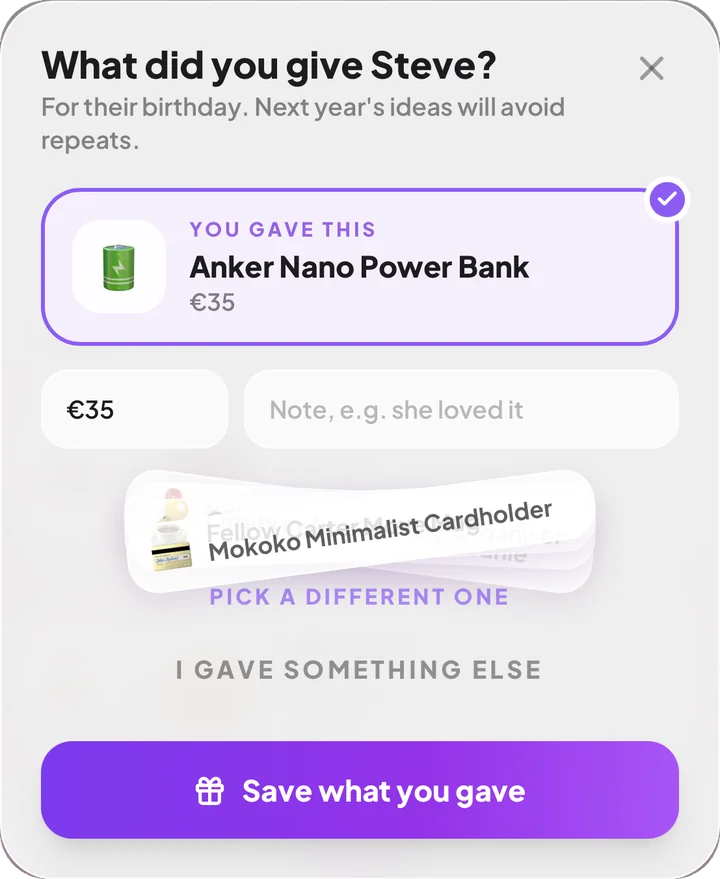
A simple record holds the gift, the occasion and year, why you chose it, and what happened after if you genuinely know. That is enough. For how to capture it in the first place, see how to keep track of gift ideas and past gifts.
The three checks before you buy
When an idea feels familiar, ask:
- 1Have I given this exact thing before?If yes, is a duplicate actually useful?
- 2Do they already have enough of this category?A different mug can still be one mug too many.
- 3If I am repeating it, is it on purpose?If yes and you have a reason, there is nothing to apologise for.
Those three checks do more than a blanket “never repeat gifts” rule.
Exact repeat, category repeat and tradition are different
Check carefully
The same book, the same device, the same durable object.
Often fine
A different book, different coffee, different kitchen tool. Fine if the category still fits them.
The repeat is the point
The repetition itself is part of why the gift works.
This stops you overcorrecting. If somebody loves fiction, you do not need to avoid books forever because you gave one last year. If your brother wants the same ridiculous birthday cake every year, being original may make the gift worse.
What if you genuinely cannot remember what you gave?
Do not spend an hour reconstructing ten years of history for a twenty-euro present. If the risk matters, check the easy places first:
- old order emails
- photos from the occasion
- messages where you discussed the gift
- a partner or family member who might remember
Still not sure? Pick something where a duplicate would be harmless, or go in a different direction. Then start the history now. You do not need to rebuild the past to make next year easier.
Gift history should make decisions easier, not narrower
Gave socks in 2024. Socks permanently banned.
Gave thick hiking socks in 2024. He used them constantly.
Outdoor consumables are probably a safe category.
Gift history is context, not a blacklist. It reminds you what happened so you can make a better decision now.
Where Giftin fits
Giftin keeps past gifts on the person, next to their dates, notes and saved ideas, so “did I give them this already?” does not depend on memory every year. Use the history to avoid pointless duplicates. Ignore it when a repeat is genuinely the better gift.
Sources and research notes
- Julian Givi, “(Not) giving the same old song and dance,” Journal of Business Research, 2020. Nine studies found givers chose repeat gifts less often than recipients preferred, largely because givers saw repeats as less thoughtful and more boring.

Know what you already gave.
Giftin keeps past gifts on the person, so next year starts with the history instead of a guess.
Download Giftin