If they buy themselves whatever they want, stop hunting for something they somehow missed. Think about something they use all the time, a small annoyance you could help with, or an outing you can actually organise for them.
Six places to look
1. Remove a small irritation
Listen for the boring complaint they repeat: the bag zip that sticks, the chair that hurts after an hour or the task they keep delaying. A repair, replacement or bit of help can beat a clever object. Buying for parents who keep saying “nothing”? See Christmas gifts for parents who want nothing.
Fix something they already agree is annoying.
Buying a solution to a “problem” only you think they have.
2. Upgrade something they already use
Visible wear is good evidence. The slippers with no sole left are safer territory than professional coffee equipment you do not understand. For specialist hobbies, ask someone knowledgeable for the exact version. No obvious hobby at all? See what to get someone who has no hobbies.
3. Give something that disappears
Food, flowers, coffee, hobby supplies, tickets or a subscription can feel generous without becoming another object to store forever. The personal part comes from choosing the right one, not printing their name on it. Still stuck at Christmas? See what to get someone for Christmas when you’re stuck.
4. Plan an experience properly
Book the table. Check the date. Cover both tickets if the activity needs two people. “We should go somewhere sometime” is not an experience gift. It is a sentence with admin attached.
5. Give time or useful help
Make the offer specific: watch the children next Friday, help assemble the furniture or drive them to the airport. Add the date or next step so your gift does not quietly become their job to organise.
6. Preserve something only you know
A restored photograph, family recipe, recorded story or repaired keepsake can carry value no shop can reproduce. It does not need to be grand. It needs a real connection.
How to find clues without asking “what do you want?”
- Ask one person close to them. Their partner, sibling or adult child can confirm what is worn out, already owned or quietly wanted.
- Bring up the topic without mentioning the gift. “Are those headphones still annoying you?” tells you more than a vague request for ideas.
- Notice what they borrow. Repeated borrowing can reveal a need, but confirm they want their own.
- Listen for delayed purchases. “I keep meaning to replace this” is basically a highlighted note.
- Ask what they have been putting off doing. The answer may point to help or an experience rather than a product.
What if “I want nothing” means nothing?
Believe them. Some people dislike clutter, feel awkward receiving expensive things or do not care much about gifts. A card, favourite meal, call, time together or no gift at all may be the respectful answer.
Do not turn their boundary into a puzzle your shopping skills must defeat.
Worked example: they buy their own tech
- buys their own devices
- lives in a small flat
- likes good food
- rarely organises plans
- says they need nothing
A booked tasting, a small speciality food delivery or a properly organised day together avoids guessing at tech, adding clutter or handing them another plan to arrange.
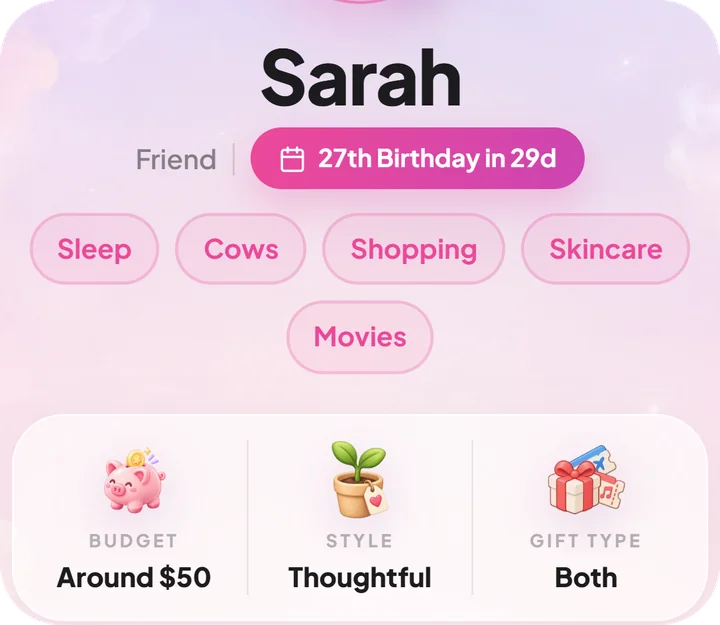
When Giftin is worth opening
You need to remember past gifts, avoid clutter, compare physical and experience-based ideas, and keep their dislikes and budget together.
They clearly asked for no gift, or you already know the exact thing and only need to buy it.
Giftin can rule out more bad fits and open different types of idea. It should not invent a hidden need or argue with “no gifts.”
A few awkward cases
What should I get a minimalist?
Start with consumables, time, useful services or an experience they would choose. Avoid decorative objects unless they asked for one.
Is a gift card lazy?
A random card can feel random. A card for a place they already use, paired with a clear reason, can be exactly right.
What do I give a wealthy person on a smaller budget?
Do not compete with their spending. Use effort, access, humour, a shared memory or a small thing you can choose or organise better than they would.
Is it okay to give nothing?
Yes. Especially when they clearly asked for no gift. A call, card or meal can still mark the day.
Sources and research notes
- Experiential Gifts Foster Stronger Social Relationships Than Material Gifts. Research on experiential gifts and relationship strength.
- When Consumers Prefer to Give Material Gifts Instead of Experiences. Research on why experiences can feel riskier when the giver knows less about the recipient.
- Sentimental value and gift giving. Research on givers avoiding sentimental gifts because they fear getting them wrong.
- When a gift exchange isn’t an exchange. Research on discomfort when recipients cannot reciprocate.
- Gift for someone who “has everything”?. A recent example of the lived problem.
Reddit links are included as examples of lived experience, not as representative research.

Stop trying to invent a need.
Giftin keeps preferences, past gifts and things to avoid together, so the next search starts with what you already know.
Download Giftin